
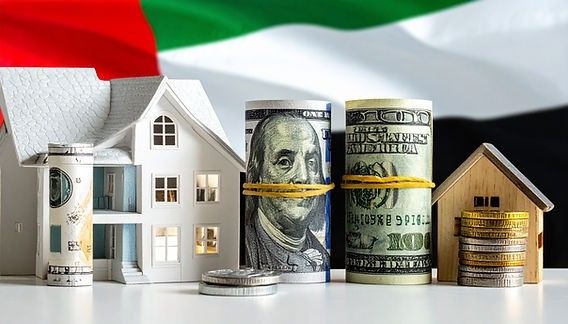
Demand for Home Loans in UAE Surges as More Residents Shift from Renting to Buying
United Arab Emirates — The UAE is experiencing a sharp rise in home loan demand as residents increasingly abandon renting in favor of property ownership, according to Raheel Ahmed, Group CEO of RAKBank. Lower borrowing costs, escalating rents, and longer residency commitments among expatriates are converging to reshape the nation’s housing finance landscape.
“We’re seeing very strong demand for both personal and mortgage lending,” Ahmed told Khaleej Times. “As financing becomes more affordable and rent costs climb, many people are deciding that purchasing a home makes better financial sense than renting.”
On average, UAE residents now transition from renting to buying after approximately 4.4 years of living in the country.
Mortgage Growth Accelerates Across Major Emirates
Central Bank of the UAE data from December 2025 confirms robust mortgage expansion across the country’s two largest property markets.
Abu Dhabi recorded exceptional growth in the first three quarters of 2025 compared to the previous year. Apartment mortgages more than doubled, surging 116.9 percent, while villa mortgages climbed 56.5 percent.
Dubai demonstrated sustained end-user demand with apartment mortgages rising 22.5 percent and villa mortgages increasing 6.1 percent. These figures reflect genuine homebuyers rather than speculative investors.
RAKBank’s own financial results mirror this national trend. The bank reported gross loans and advances climbing 12 percent year-on-year to Dh55.9 billion in 2025. Personal loans and advances reached Dh25 billion, driven significantly by mortgage and expatriate lending, while business banking loans rose to Dh11.3 billion.
Why the Shift Is Happening Now
Lower Borrowing Costs:
The UAE Central Bank reduced its key policy rate from 4.40 percent in the second quarter of 2025 to 4.15 percent by the end of the third quarter, aligning with global monetary policy trends. This reduction makes mortgages significantly less expensive and more accessible to middle-income earners.
Rising Rents:
Rental costs in Dubai and Abu Dhabi have climbed steadily over recent years. As monthly rent payments approach or exceed potential mortgage installments, the financial calculus shifts decisively toward ownership.
Changing Demographics:
Ahmed highlighted an evolving profile of UAE arrivals. More residents are relocating with families under long-term and Golden Visas, signaling permanent settlement intentions rather than transient employment stints.
The average age of new arrivals has dropped to approximately 31.6 years, with a rising proportion of white-collar skilled workers. These younger professionals are motivated to invest in property and establish roots rather than remain perpetual renters.
Three Categories of UAE Property Buyers
Ahmed identified distinct buyer segments driving mortgage demand:
Affluent newcomers purchase property almost immediately upon arrival, driven by confidence in the UAE’s economic trajectory and long-term prospects.
Investors focus on off-plan properties, anticipating capital appreciation and rental yields in a market with sustained demand.
Long-term residents and digital workers represent the classic transition segment. After three to four years of employment and lifestyle establishment, they leverage mortgages to move from renting to owning.
Broader Real Estate and Lending Trends
The mortgage surge aligns with fundamental shifts in the UAE property market.
Buyer intent data from leading real estate platforms shows a growing cohort of first-time buyers actively seeking purchase opportunities rather than rental listings. Apartments dominate transaction volumes due to broader supply and relative affordability, while villa demand remains constrained by limited inventory.
Enhanced regulatory frameworks and digital transformation are accelerating mortgage accessibility. Fully digital home loan applications and streamlined approval processes reduce friction for borrowers and improve transparency. These efficiencies further stimulate demand.
Outlook for 2026 and Beyond
Banking analysts project continued mortgage growth through 2026 and beyond, contingent on stable borrowing costs and sustained employment strength.
Retail lending — particularly home financing and personal loans — is expected to remain a primary growth engine for UAE banks even as global economic headwinds persist.
More significantly, the UAE’s housing finance market appears to be undergoing a structural transformation. The historical dominance of cash purchases and speculative investment is giving way to an ecosystem rooted in end-user ownership and long-term residency.
This evolution carries implications beyond banking balance sheets. Homeownership anchors families to communities, supports stable neighborhood development, and contributes to the UAE’s vision of a sustainable, knowledge-based economy.
Also Read: U.S. Shifts Patriot Missiles to Mobile Launchers at Qatar Base Amid Iran Tensions
Conclusion: From Renter Nation to Owner Nation
The surge in UAE home loan demand signals more than a cyclical response to interest rate adjustments. It reflects a generational shift in how residents view their relationship with the country.
For decades, expatriates largely treated UAE property as transient accommodation — functional, temporary, and easily surrendered. That mindset is eroding.
Today’s homebuyers see mortgages not as debt burdens but as wealth-building instruments. They view properties not as expenses but as assets. They plan not in years but in decades.
Lower rates and higher rents accelerated this transition. But the deeper driver is confidence — in the UAE’s stability, in its economic trajectory, and in the promise of building a life, not merely a career, in this country.
