
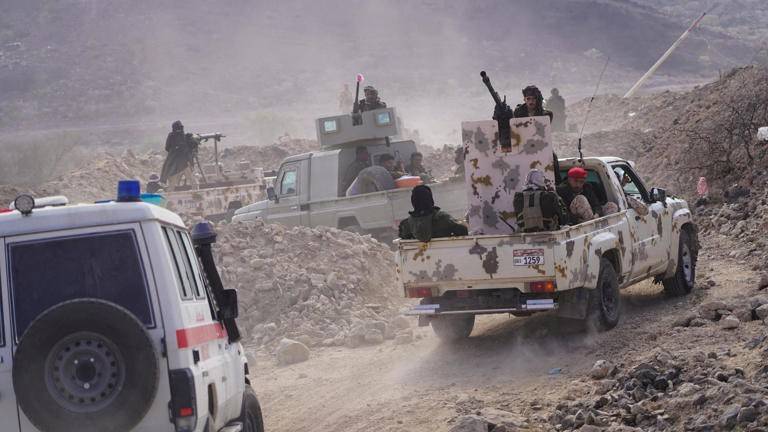
Saudi Forces Push UAE-Backed Fighters Out of Eastern Yemen, Deepening Gulf Rift
In a significant escalation of Yemen’s decade-long conflict, Saudi-backed government forces have expelled UAE-supported fighters from key eastern provinces, marking a sharp rift between the Gulf allies and altering the war’s strategic landscape.
Military Advances in Hadramout and Al-Mahra
Over the past week, forces aligned with Yemen’s Saudi-backed Presidential Leadership Council (PLC) advanced across the eastern provinces of Hadramout and Al-Mahra. They recaptured Mukalla, the capital of Hadramout and a strategically vital port city, along with critical infrastructure like Riyan Airport and the Al-Dhahab oil terminal. In Al-Mahra, Saudi-aligned forces secured control over all nine districts after Southern Transitional Council (STC) units withdrew from cities like Al-Ghaydah.
Casualties and Captures
The clashes resulted in significant STC losses, with reports indicating at least 80 fighters killed, 150 wounded, and 130 captured. Many STC camps surrendered after receiving assurances of safe integration into Saudi-aligned forces.
A Deepening Gulf Rift
This campaign highlights growing tensions between Saudi Arabia and the UAE, historically close partners in Yemen’s conflict. While both nations intervened against Iran-backed Houthi rebels, differences over southern separatism have strained relations. The UAE-backed STC seeks autonomy or independence for southern Yemen, while Saudi Arabia supports a unified Yemeni state and views separatist advances near its border as a security threat.
Recent Saudi airstrikes on STC positions and suspected UAE weapons shipments—including a strike on Mukalla port—prompted the UAE to announce the withdrawal of its remaining military forces from Yemen. This dispute represents the sharpest diplomatic rupture between Riyadh and Abu Dhabi in decades.
Diplomatic Moves and Future Prospects
Despite military setbacks, the STC has signaled willingness to engage in dialogue, with delegations expected to travel to Riyadh for talks. The recapture of economic hubs like Mukalla strengthens the central government’s leverage in future settlement negotiations.
Humanitarian and Regional Implications
For Yemen—already devastated by war, economic collapse, and humanitarian crisis—this rift adds another layer of complexity. Renewed internal conflict risks exacerbating humanitarian needs and destabilizing the broader Red Sea and Gulf region.
Also Read: Abu Dhabi Astronomers Capture Elusive ‘Squid Nebula’ After 18-Month Imaging Effort
Conclusion
The conflict in eastern Yemen has evolved from a local struggle into a flashpoint for broader Gulf tensions. As Saudi Arabia and the UAE pursue divergent strategies, the outcome will significantly influence Yemen’s future and the Middle Eastern balance of power in the coming years.
