
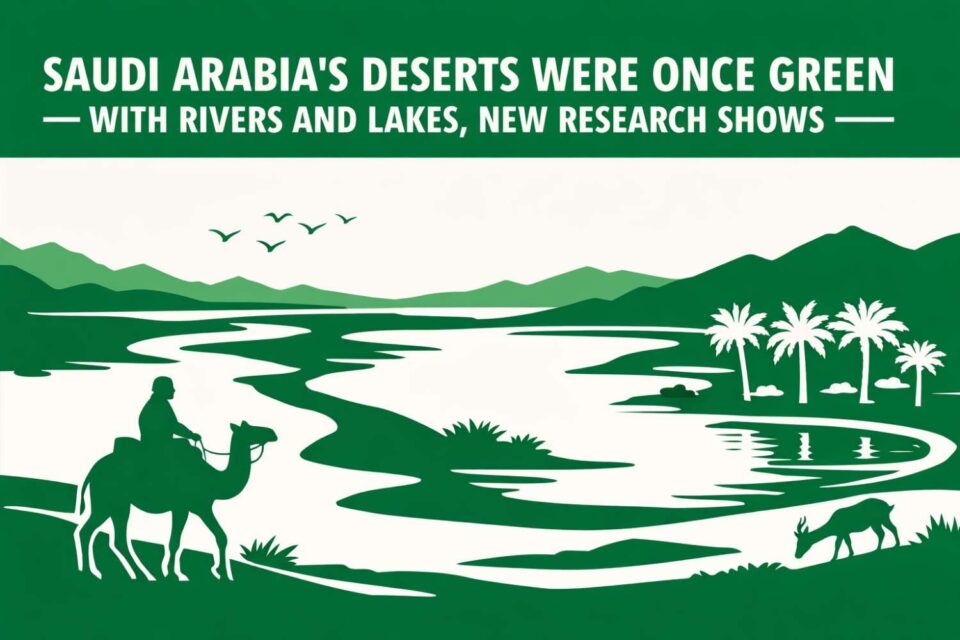
New Study Reveals Saudi Arabia’s Deserts Were Once Fertile Green Landscapes
Groundbreaking scientific research has revealed that the vast deserts of Saudi Arabia, including the immense Rub’ al-Khali (Empty Quarter), were once fertile green landscapes teeming with rivers, lakes, and grasslands. This discovery reshapes our understanding of the Arabian Peninsula’s environmental history and its role in ancient human migration.
From Lush Green to Arid Desert
Today, Saudi Arabia is dominated by the Arabian Desert and the Rub’ al-Khali—some of the driest regions on Earth. However, studies show that between humid climate phases over the past several million years, the peninsula experienced intense monsoon rains from African and Indian systems, transforming it into a savannah-like environment with abundant water.
Evidence of Ancient Water Systems
Research combining satellite imagery, sediment analysis, and field surveys has uncovered compelling evidence:
Ancient Riverbeds: Networks of dried river channels crisscross the desert.
Lake Sediments: The Rub’ al-Khali once hosted a massive lake covering approximately 1,100 square kilometers and reaching depths of up to 42 meters.
Fossil Records: Discoveries of hippopotamus, crocodile, and freshwater mollusk fossils confirm the presence of water-dependent life.
Archaeological Finds: Stone tools and artifacts indicate early human populations thrived in these green landscapes.
The Green Arabia Phenomenon
During peak wet periods, known as “Green Arabia,” the region’s lake systems overflowed, carving a 150-kilometer-long valley into the desert floor. These water corridors provided sustainable habitats for plants, animals, and humans for thousands of years. Studies suggest such green phases occurred repeatedly over the last 8 million years, alternating with long dry spells.
Implications for Human Migration
The existence of green corridors across Arabia is crucial for understanding early human migration from Africa to Eurasia. These hospitable routes would have enabled nomadic hunter-gatherers to traverse the peninsula, settling and adapting during wet phases before moving on as conditions dried.
Modern Lessons and Initiatives
This ancient climate history highlights the dynamic nature of Earth’s environment. As Saudi Arabia today invests in large-scale greening projects like the Saudi Green Initiative, understanding past natural cycles can inform future sustainability and conservation efforts.
Also Read: Saudi Arabia Hits 99% Internet Penetration Among 15–74 Age Group, GASTAT Reports
Conclusion
The discovery of Saudi Arabia’s green past not only enriches our knowledge of prehistoric ecosystems and human history but also underscores the profound impact of climate cycles on landscapes. As research continues, these insights will help us better appreciate the fragility and resilience of desert environments in a changing world.
