
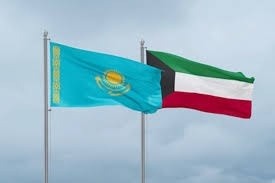
How Kuwaiti–Kazakh Diplomacy Sets a Model for Long-Term Global Cooperation
Kuwait City/Astana — In an increasingly complex geopolitical landscape, the diplomatic relationship between Kuwait and Kazakhstan has emerged as an example of how two nations—separated by vast geography, culture, and history—can build a partnership rooted in mutual respect, shared values, and a commitment to sustainable development. What began as early recognition of Kazakhstan’s independence in the 1990s has grown into a multifaceted cooperation that spans economic investment, social values, humanitarian work and strategic dialogue.
A Foundation Built on Early Recognition and Trust
Diplomatic ties between Kuwait and Kazakhstan date back to January 1993, when Kuwait was among the first countries to officially recognise Kazakhstan’s independence after the collapse of the Soviet Union. This early act of diplomatic support laid the groundwork for over three decades of collaboration, setting a tone of trust and mutual goodwill that continues to shape bilateral relations today.
Despite the geographical distance between the oil-rich Arabian Gulf and Kazakhstan’s vast Central Asian steppe, leaders in both countries have nurtured ties that extend above and beyond routine political exchanges. Both societies emphasise common social values such as hospitality, generosity, and pride in cultural identity—factors that have deepened social understanding and contributed to a resilient diplomatic bond.
This foundation of mutual respect has enabled the relationship to weather regional and global challenges, providing stability and continuity even as broader geopolitical currents shift. High-level visits between the two countries have become regular features of the diplomatic calendar, reinforcing personal relationships between leaders and officials that translate into institutional trust.
Growing Economic Cooperation
Economic relations between Kuwait and Kazakhstan have accelerated in recent years, driven by shared visions for future development. Each country’s long-term strategic planning—Kuwait Vision 2035 and Kazakhstan Vision 2050—provides a framework for cooperation across energy, agriculture, technology and infrastructure.
Food security partnership:
Kazakhstan has become an increasingly important partner for Kuwait’s food security. Exports of Kazakh meat and grain have expanded notably, facilitated by direct flights between the countries and a mutual visa-waiver policy that has boosted tourism and trade connectivity. While total trade volume remains relatively modest—roughly US $4 million in 2024—efforts are underway to significantly increase this figure through expanded investment in sectors such as FinTech, logistics and renewable energy.
Energy sector collaboration:
Major Kuwaiti institutions are stepping up their involvement. In early 2026, the Kuwait Foreign Petroleum Exploration Company (KUFPEC) signalled interest in Kazakhstan’s natural gas opportunities, examining possibilities in the country’s energy sector. Kazakhstan’s vast hydrocarbon reserves, particularly in the Caspian region, offer significant potential for Kuwaiti investment and technical cooperation.
Agricultural investment:
The Kuwait Investment Fund is exploring a substantial injection of capital—between US $1.5 billion and US $2 billion—into grain processing and agricultural projects that could strengthen food supply chains and bolster Kazakhstan’s export potential. These investments would not only benefit Kuwait’s food security but also create jobs and infrastructure in Kazakhstan’s agricultural regions.
Digital infrastructure:
The Kuwait Investment Company (KIC) is also in advanced talks with Kazakh partners on digital infrastructure and emerging technologies, reflecting a shared interest in economic digitalisation. FinTech, e-government services, and digital payments represent growth areas where both countries see potential for collaboration.
Agribusiness partnership:
Additionally, a memorandum of cooperation signed between Kazakhstan’s Eurasia Agro Semey and Kuwait’s ALMARAI National Co. aims to develop meat product supplies through a new processing plant scheduled to begin operations later in 2026. This facility will process Kazakh meat to international standards for export to Kuwait and potentially other Gulf markets, creating a sustainable supply chain that benefits producers in Kazakhstan and consumers in the Gulf.
Humanitarian and Development Partnerships
Beyond commercial interests, Kuwaiti support for Kazakhstan’s development goals has a long history. The Kuwait Fund for Arab Economic Development (KFAED) was one of the first Arab institutions to support Kazakhstan back in the early 1990s, notably financing water supply improvements in areas affected by the Aral Sea environmental disaster.
Today, that partnership continues in projects related to water, agriculture, and environmental sustainability, such as combating desertification and supporting land rehabilitation efforts around Semipalatinsk, where decades of nuclear testing left environmental scars requiring remediation.
KFAED’s role has evolved from direct investment to also include feasibility study grants and capacity-building initiatives, helping attract private capital while promoting sustainable development. By combining public and private sector efforts, the partnership enhances both nations’ long-term resilience and contributes to regional stability.
Key humanitarian and development projects:
Water infrastructure improvements in Aral Sea region
Desertification control and land rehabilitation
Agricultural extension services and training
Environmental remediation in former test sites
Capacity building for sustainable development planning
People-to-People Ties and Cultural Exchange
Tourism growth is another sign of deepening connectivity. Direct flights between Kuwait and Kazakhstan have boosted passenger traffic, with annual visitors nearing 10,000–12,000 in recent years. Kuwaiti travellers now explore Kazakhstan’s cultural heritage and natural landscapes, while Kazakh visitors contribute to cultural exchange and mutual understanding.
The visa-waiver agreement has been particularly significant, removing barriers to travel and encouraging business, tourism, and educational exchanges. Kazakh students study in Kuwaiti institutions, and Kuwaiti visitors discover the natural beauty of the Altai mountains and the cultural riches of Almaty and Astana.
Cultural events and exchanges have also multiplied. Kazakh cultural festivals in Kuwait introduce Gulf audiences to Central Asian traditions, while Kuwaiti cultural delegations to Astana share Gulf heritage with Kazakh audiences. These exchanges build understanding at the human level that complements official diplomatic ties.
Strategic Alignment
Both countries share perspectives on regional and global issues that facilitate diplomatic coordination. As moderate Muslim-majority nations with outward-looking economic policies, Kuwait and Kazakhstan often find common ground in international forums, supporting each other’s positions and initiatives.
Kazakhstan’s role as a bridge between East and West, and Kuwait’s position as a Gulf diplomatic hub, create natural complementarities. The two countries cooperate in organisations including the Organisation of Islamic Cooperation (OIC) and the Economic Cooperation Organization (ECO) , amplifying each other’s voices on issues of mutual concern.
Looking Ahead: A Blueprint for Cooperation
Kuwaiti–Kazakh relations illustrate how diplomacy—when rooted in principle, guided by shared objectives, and supported by strategic investment—can transcend geographic distance. The partnership combines economic opportunity with social values, humanitarian responsibility and forward-looking strategic planning.
Key lessons from the Kuwait-Kazakhstan model:
Early recognition and consistent engagement build trust that sustains relationships through changing circumstances
Shared values provide cultural foundation that complements formal diplomatic ties
Strategic alignment on development visions creates framework for practical cooperation
Diversified engagement across economic, humanitarian, and cultural spheres ensures resilience
Patient investment in long-term relationships yields returns that short-term approaches cannot achieve
As both countries continue to expand cooperation in food security, digital innovation, energy, and sustainable development, their partnership offers a valuable example for other nations seeking to foster meaningful, long-term relationships in a changing global order.
Conclusion: A Model for the World
The Kuwait-Kazakhstan partnership demonstrates that successful diplomacy requires more than transactional exchanges. It requires vision, patience, and commitment to shared principles that transcend immediate interests.
Three decades after Kuwait’s early recognition of Kazakh independence, the relationship has matured into a comprehensive partnership touching every sector of modern statecraft. Energy cooperation, agricultural investment, digital infrastructure, humanitarian assistance, cultural exchange, and tourism all contribute to a relationship greater than the sum of its parts.
For other nations contemplating how to build lasting international partnerships in an era of geopolitical uncertainty, the Kuwait-Kazakhstan model offers valuable lessons. Start with recognition and respect. Build through consistent engagement. Diversify across multiple sectors. Invest in human connections. And maintain commitment through changing circumstances.
Kuwait and Kazakhstan, separated by thousands of miles, united by decades of trust.
