
Tanker Attack in Middle East: Suspected Iranian “Suicide Boat” Strikes US-Owned Vessel, Killing Indian Crew Member
Tensions in the Middle East have exploded onto the high seas. A dramatic and deadly attack on a US-owned oil tanker near the Iraqi coast has raised the stakes in the ongoing conflict between Iran and the United States. In a brazen act of maritime warfare, a suspected Iranian “suicide boat” laden with explosives rammed the crude oil tanker Safesea Vishnu, resulting in a massive blast, severe damage to the vessel, and the tragic death of an Indian crew member. The incident marks a dangerous escalation, directly threatening the commercial shipping lanes that are the lifeblood of the global economy.
The Attack: A High-Speed Collision in Iraqi Waters
According to maritime security reports, the attack occurred near the vital port city of Basra in southern Iraq. The Safesea Vishnu, a crude oil tanker with links to a US-based company, was anchored in Iraqi territorial waters when it was targeted. A small craft, described by officials as a “suicide boat” operated by Iranian-backed forces, approached the tanker at high speed before detonating its explosive payload upon impact.
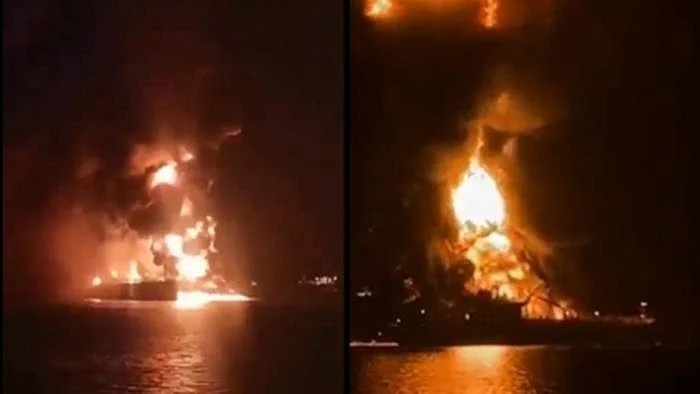
The resulting blast caused catastrophic damage to the tanker’s hull and deck, igniting fires that raged aboard the vessel. Harrowing footage circulating on social media captured the moment of collision and the subsequent fireball, bringing the raw reality of the conflict to a global audience. The attack tragically claimed the life of one Indian national serving as a crew member. Other sailors aboard were successfully rescued by emergency teams and transported to safety in Basra.
Iranian Involvement and Escalating Rhetoric
The Islamic Revolutionary Guard Corps (IRGC) has reportedly claimed responsibility for the attack, with Iranian state media suggesting the tanker ignored prior warnings from naval forces. This action is the latest in a series of escalatory moves as the broader conflict between Iran and a US-led coalition intensifies across the Middle East. By targeting commercial shipping, the IRGC demonstrates its ability to project power and inflict economic pain far beyond traditional battlefields.
A New Face of Naval Warfare: The “Suicide Boat” Threat
Security experts point to this incident as a textbook example of modern asymmetric naval warfare. These “suicide boats”—small, fast, and inexpensive craft packed with explosives—present a formidable challenge to conventional naval assets and commercial vessels. They are difficult to detect on radar, especially in congested waters or near busy ports like Basra, and can maneuver easily to strike vulnerable targets. This tactic effectively allows a state or non-state actor to threaten much larger, more valuable ships at a fraction of the cost.
The Strategic Impact: Energy Security in the Balance
The location of the attack is as significant as the act itself. The Persian Gulf and its surrounding waters, including the strategic Strait of Hormuz, form the world’s most important artery for oil exports. A substantial percentage of the globe’s crude oil passes through this region daily. An attack of this nature sends a chilling signal through the shipping and insurance industries.
In response to the heightened risk, maritime insurance companies have already begun raising war-risk premiums for vessels transiting these waters. Some shipping lines are reportedly considering temporary suspensions of voyages, unwilling to risk their ships and crews. If this trend continues, it could lead to a tangible disruption in global oil supplies, constricting the flow of energy and putting upward pressure on prices for consumers worldwide.
Human and Environmental Cost
Beyond the geopolitical and economic ramifications, the attack had immediate and tragic human consequences. The death of the Indian sailor underscores the very real dangers faced by the thousands of seafarers who keep global trade moving, often hailing from nations not directly involved in the conflict.
Furthermore, authorities are monitoring the potential for an environmental disaster. The explosion and subsequent fires on the tanker raise the risk of an oil spill in Iraqi waters, which could devastate local marine life and further complicate the safety of nearby shipping lanes.
Also Read: Samsung Galaxy S26 Ultra Review: Snapdragon 8 Elite, 200MP Camera and Privacy Display
Conclusion: A Dangerous Precedent for Global Trade
The attack on the Safesea Vishnu is far more than an isolated incident; it is a dangerous precedent. It confirms that commercial infrastructure is now a central target in the widening Middle East conflict. As investigations continue and the region holds its breath, the international community faces the stark reality that the security of global trade is now directly tied to the volatile geopolitics of the Gulf. Further attacks on shipping could deepen the crisis, potentially drawing in more nations and plunging the global economy into a full-blown energy security crisis.
